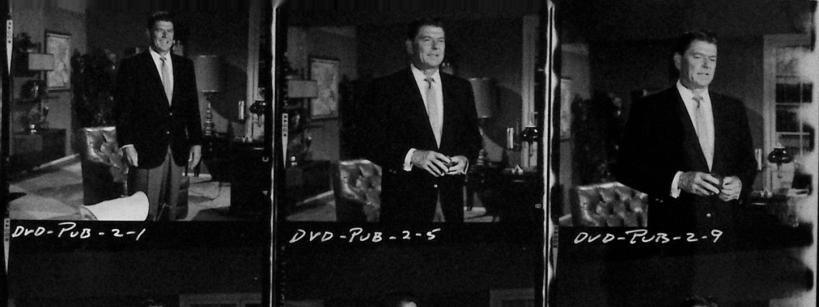
[Detail] Photographs of Ronald Reagan from a 1966 publicity shoot for Death Valley Days. Courtesy of the Autry Museum of the American West, James R. Parks Library and Archives, Death Valley Days Radio and Televisions Archive, T2025-25
By Cheryl Miller, Director of the James R. Parks Library and Archives
The race for governor is well underway here in California, and it is unlikely that the winner in November 2026 will have a history of advertising soap and laundry detergent.
From Pío Pico to Leland Stanford to Pat Brown to Arnold Schwarzenegger, California governors loom large in the James R. Parks Library and Archives. And it’s probably safe to say nothing is quite as curious as Ronald Reagan pitching the cleansing power of 20 Mule Team Borax.
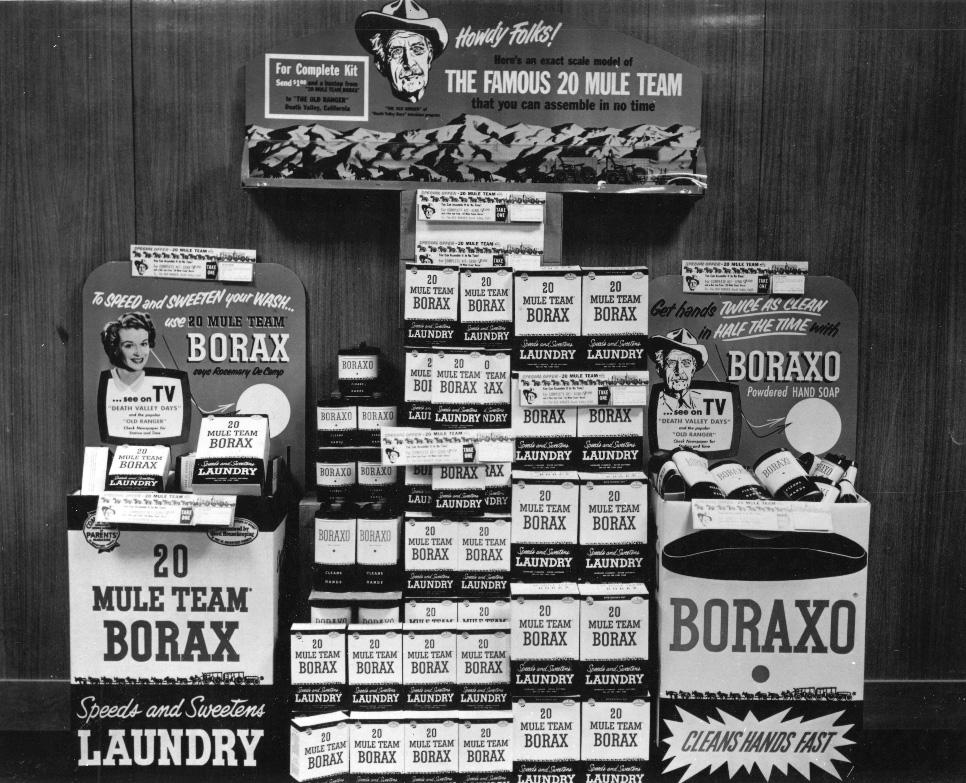
Sales display of 20 Mule Team Borax, circa 1960s. Courtesy of the Autry Museum of the American West, James R. Parks Library and Archives, Death Valley Days Radio and Television Archive, T2025-25
With roots going back to the late 1800s, 20 Mule Team Borax is a classic American product. It’s a naturally occurring mineral (sodium borate) that’s been used for cleaning, laundry, and even some industrial purposes for well over a century. The name comes from the historic method of transporting borax out of Death Valley. Massive wagons loaded with borax were pulled by teams of twenty mules (actually eighteen mules and two horses) across harsh desert terrain to the nearest railhead. This image became iconic in American Western history. The brand was closely tied to both the Death Valley Days radio program (1930–1951) and the TV series (1952–1970), as the Borax Company originally sponsored the show. Its full early title was Death Valley Days, Brought to You by 20 Mule Team Borax.
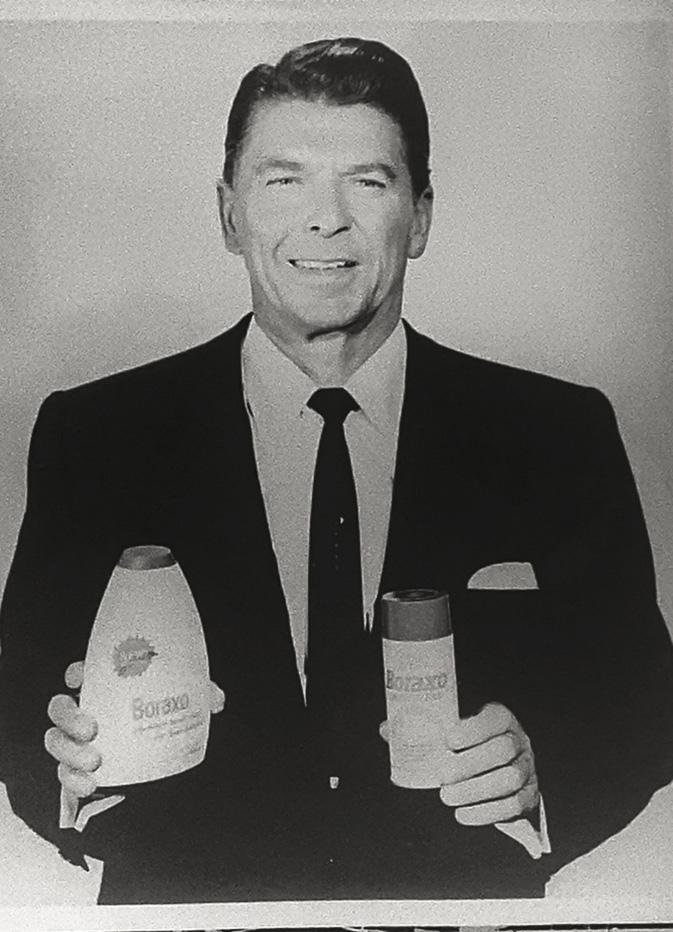
Photograph of Ronald Reagan selling Boraxo, circa 1966. Courtesy of the Autry Museum of the American West, James R. Parks Library and Archives, Death Valley Days Radio and Television Archive, T2025-25
Death Valley Days, originally produced by Gene Autry’s Flying-A Productions, featured several well-known hosts over the years—including Ronald Reagan. Reagan hosted Death Valley Days from 1964 to 1966. During his time on the show, Reagan would introduce the episodes that dramatized “real” stories of the American Old West, often centered around pioneers, lawmen, and frontier life. Additionally, he appeared in segments promoting 20 Mule Team Borax, reinforcing that Old West image tied to borax mining. His involvement with the show is notable because it came right before his political career took off. While hosting, he delivered speeches on behalf of conservative causes, which helped build his public profile. Turns out, this was an issue of concern at the time, as we can discover in the Autry Archives.
The Death Valley Days Radio and Television Archive was donated to the James R. Parks Library and Archives by U.S. Borax Inc., successor to U.S. Borax mining operations. It includes scripts, photographs and negatives, promotional materials, and internal documents, such as memos about the production activities. And it is through those memos that we get a glimpse of the production company’s decision-making process regarding the renewal of Reagan’s contract. Reasons for renewal included the fact that he was an outstanding salesman as well as a proven asset, and that there might be audience blowback if he wasn’t retained. Reasons against renewal included questions about his availability, the chance that the political campaign would become malicious, and what might happen if he didn’t win. Per the handwritten note (and history), his contract was renewed for another year, to the mutual satisfaction of Reagan and the producers. In 1966, the final year of his contract, Reagan was elected governor.
Memorandum from Death Valley Daysproducers evaluating whether to offer Ronald Reagan a contract extension [page 1 of 2]. Courtesy of the Autry Museum of the American West, James R. Parks Library and Archives, Death Valley Days Radio and Television Archive, T2025-25
Memorandum from Death Valley Daysproducers evaluating whether to offer Ronald Reagan a contract extension [page 2 of 2]. Courtesy of the Autry Museum of the American West, James R. Parks Library and Archives, Death Valley Days Radio and Television Archive, T2025-25
Photographs of Ronald Reagan from a 1966 publicity shoot for Death Valley Days. Courtesy of the Autry Museum of the American West, James R. Parks Library and Archives, Death Valley Days Radio and Television Archive, T2025-25
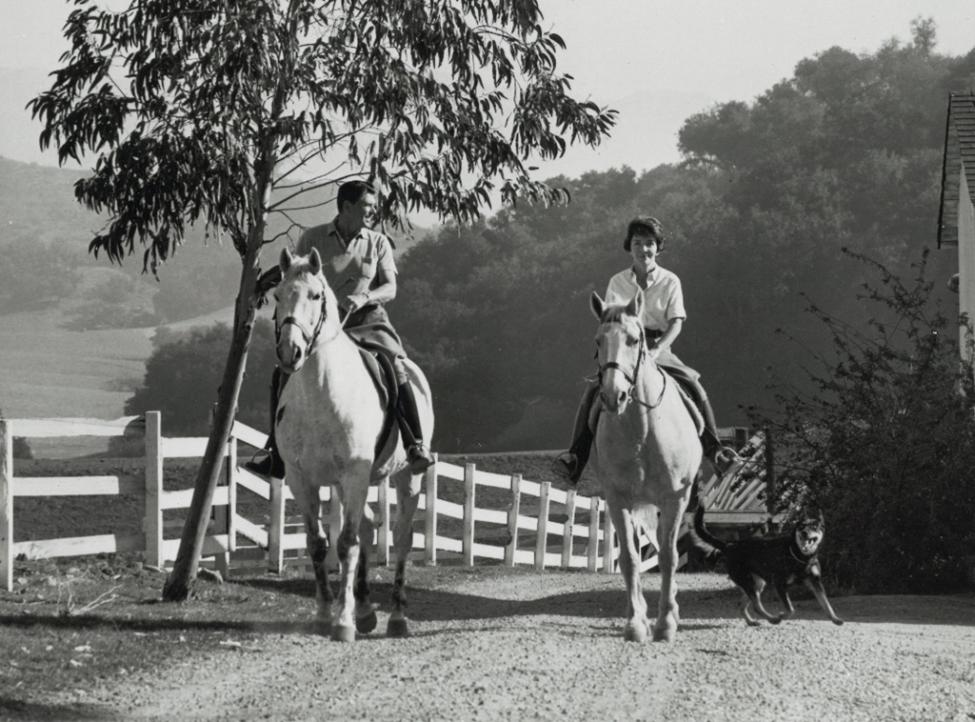
“Death Valley Days was Reagan’s last TV show before he ran for governor of California. In his ads hawking Borax, he is simultaneously a character of the old West, a glamorous actor, and the father of Patty Reagan, who shows how domestic Borax can be. It’s a neat trick, and it foreshadows Reagan’s uncanny ability to evoke a mythic past with a vision of domestic tranquility for political purposes.”
-- Kim Stringfellow, artist, writer, educator, and independent curator
So, during this election season, if you choose to look backward instead of looking forward, the Autry Library and Archives might be the place for you.
Publicity photograph of Ronald Reagan, circa 1964. Courtesy of the Autry Museum of the American West, James R. Parks Library and Archives, Death Valley Days Radio and Television Archive, T2025-25
The Autry Museum of the American West acknowledges the Gabrielino/Tongva peoples as the traditional land caretakers of Tovaangar (the Los Angeles basin and So. Channel Islands). We recognize that the Autry Museum and its campuses are located on the traditional lands of Gabrielino/Tongva peoples and we pay our respects to the Honuukvetam (Ancestors), ‘Ahiihirom (Elders) and ‘Eyoohiinkem (our relatives/relations) past, present and emerging.
Autry Museum of the American West
4700 Western Heritage Way Los Angeles, CA 90027-1462 In Griffith Park across from the Los Angeles Zoo Map and Directions
Free parking for Autry visitors
MUSEUM AND STORE HOURS Tuesday–Friday 10:00 a.m.–4:00 p.m. Saturday–Sunday 10:00 a.m.–5:00 p.m.
DINING Food trucks are available on select days, contact us for details at 323.495.4252. The cafe is closed temporarily until further notice.