
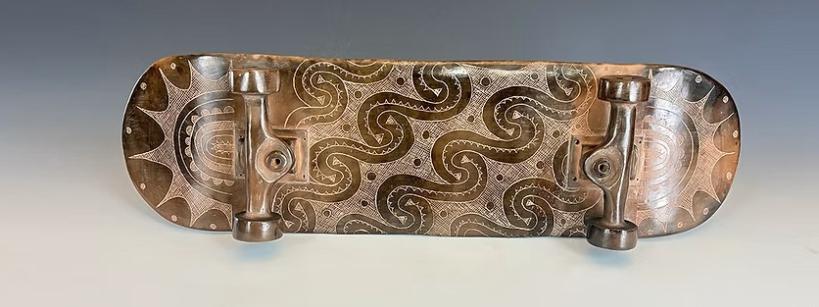
Chase Kahwinhut Earles (Caddo). Skateboard III, 2024. Commercial clay. Museum purchase; 2026.3.1. Photography courtesy of the artist
Exhibition Opening Celebration | Native Skate
–
Norman F. Sprague, Jr. Gallery
- Admission:
- Available to invited guests and Supporter, Patron, and Curator’s Circle members
- RSVP/Reservations:
- Reservations required | RSVP to Ryan Lichten in the Membership Office at 323.495.4262
About the Member Event
Join artists, curators, sponsors, and museum leadership as we celebrate the Autry’s new exhibition, Native Skate.
Schedule of Events
| 6 p.m. | Reception with light fare begins. Exhibition opens. |
| 7 p.m. | Welcome remarks by museum leadership |
About the Exhibition
Skateboarding has become a worldwide sport, as evidenced by its entrance into Olympic competition in 2020. Initially inspired by surfing, skateboarding began in the 1950s in Southern California and has grown exponentially in the past seventy years; it is estimated that there are 85 million skateboarders worldwide. Over the years, skaters have formed their own subcultures, including skateboarding techniques and styles, artwork, clothing, language, and music.
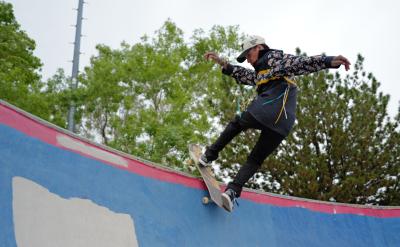
Across the Americas, Native American youth have embraced skateboarding and formed their own unique communities. With more than forty skateparks on or near Indian reservations, skateboarding has been embraced by Native communities and provides a creative platform for youth to express themselves through cruising, street riding, and transition skating. It is a self-empowering practice that reinforces community, cultural heritage, and physical fitness.
Native Skate explores the importance of skateboarding in Indigenous communities through art, documentary footage, and community engagement. The exhibition will focus on several Indigenous skate communities on their homelands, visualizing how skateboarding has impacted the skaters’ lives. These communities include the Blackfeet Indian Reservation, Fort Belknap Indian Reservation (A’aniiih and Nakoda), Pine Ridge Indian Reservation (Oglala Lakota), Warm Springs Indian Reservation (Warm Springs, Wasco, and Paiute), and the all-female ImillaSkate collective located in Cochabamba, Bolivia. The exhibition will also explore how many Native artists use skate decks as a medium for cultural identity and self-expression.
Native Skate is supported, in part, by the Los Angeles County Board of Supervisors through the Department of Arts and Culture.